Healthcheck Integration Concept
HealthCheck
A privacy-first digital health experience that empowers informed dating decisions
Role: Product Designer | UX Researcher | UI Designer
Timeline: Concept Project
Tools: Figma, HTML/CSS Prototype, User Research, Information Architecture, Interaction Design
Overview
HealthCheck is a concept application designed to help people make informed decisions about their sexual health before and during dating. Rather than exposing sensitive medical information, the platform focuses on education, prevention, and privacy through personalized testing reminders, public health insights, and optional verification features.
The goal was to explore how thoughtful product design can encourage healthier conversations while reducing the stigma often associated with sexual health.
The Challenge
Many people struggle to find reliable, accessible sexual health information. Existing resources are spread across healthcare providers, government websites, and educational platforms, making it difficult to know:
When to get tested
Where to find care
How to interpret public health information
How to discuss sexual health with a new partner
How to protect personal privacy while building trust
There is an opportunity to bridge healthcare education with modern dating experiences through a user-centered product.
The Solution
HealthCheck provides a centralized experience that combines education, prevention, and privacy into one intuitive platform.
Core features include:
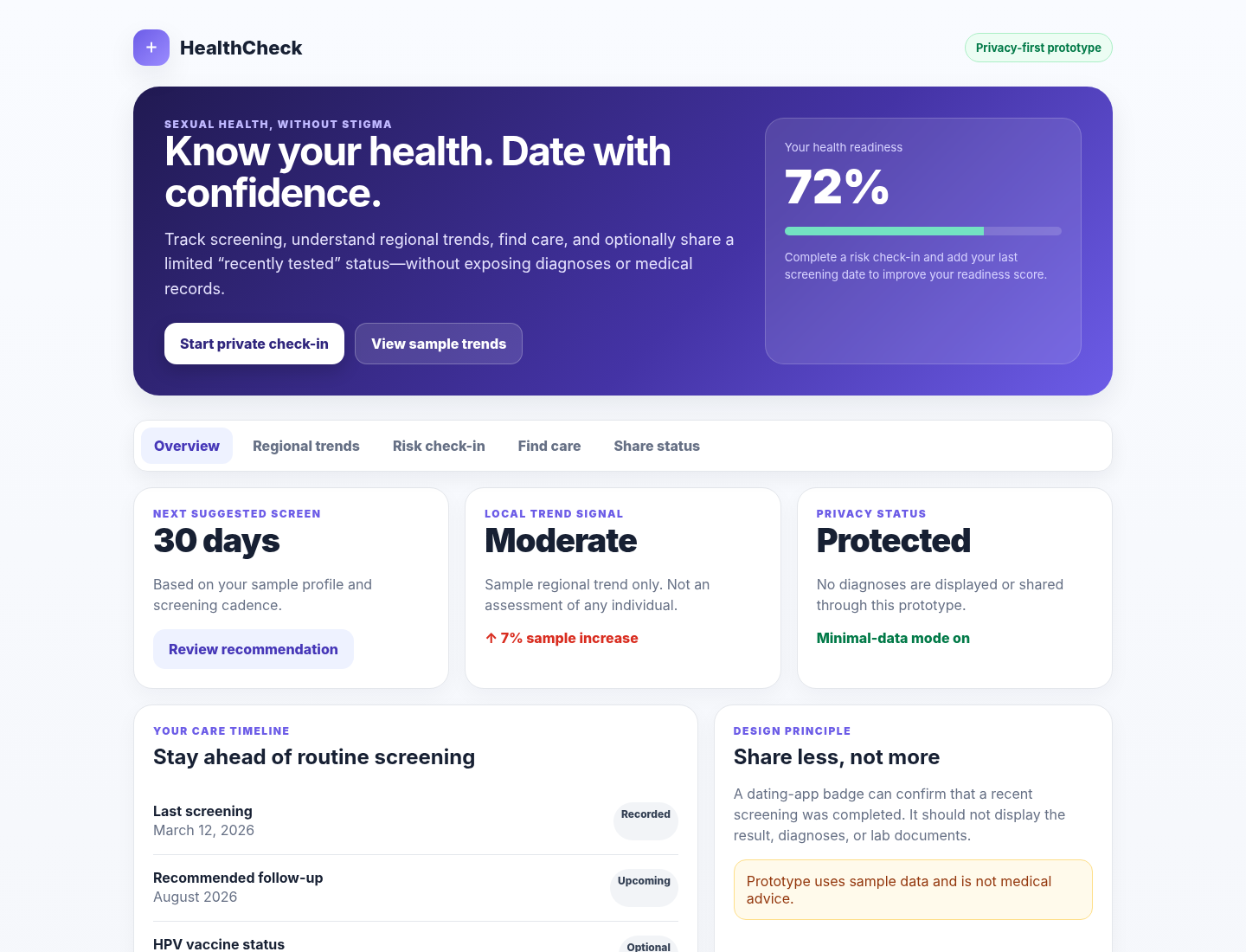
Personalized testing reminders
Interactive regional STI trend dashboards
Private health risk check-ins
Nearby clinic locator
Educational resources
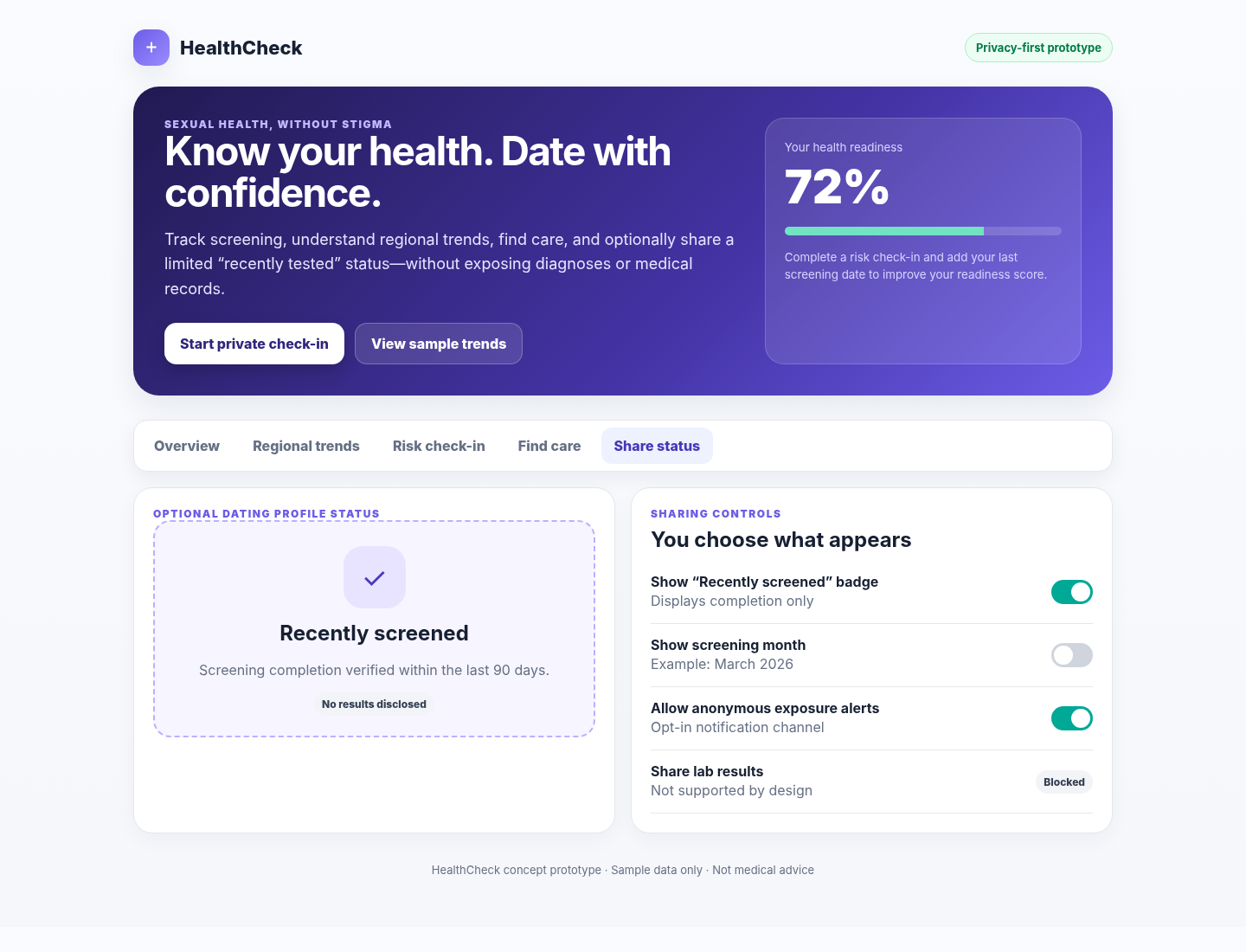
Optional "Recently Screened" verification badge
Privacy controls that allow users to decide what information they share
The product intentionally avoids displaying medical diagnoses or laboratory results, focusing instead on empowering users through education and informed decision-making.
My Process
Research
I began by examining current public health resources, dating applications, and digital healthcare products to better understand how users currently navigate conversations around sexual wellness.
Research revealed three recurring themes:
Users value privacy above all else.
Public health information is often difficult to understand.
Many people delay testing because they are unsure when it is appropriate.
Defining the Experience
From those insights, I established four guiding principles:
Design for trust
Protect user privacy
Reduce cognitive load
Encourage preventative care
These principles informed every product decision throughout the project.
Information Architecture
I organized the application into five primary experiences:
Dashboard
Regional Health Trends
Health Check
Find Care
Privacy Settings
This simplified navigation allows users to quickly accomplish common tasks while keeping the interface approachable.
Interaction Design
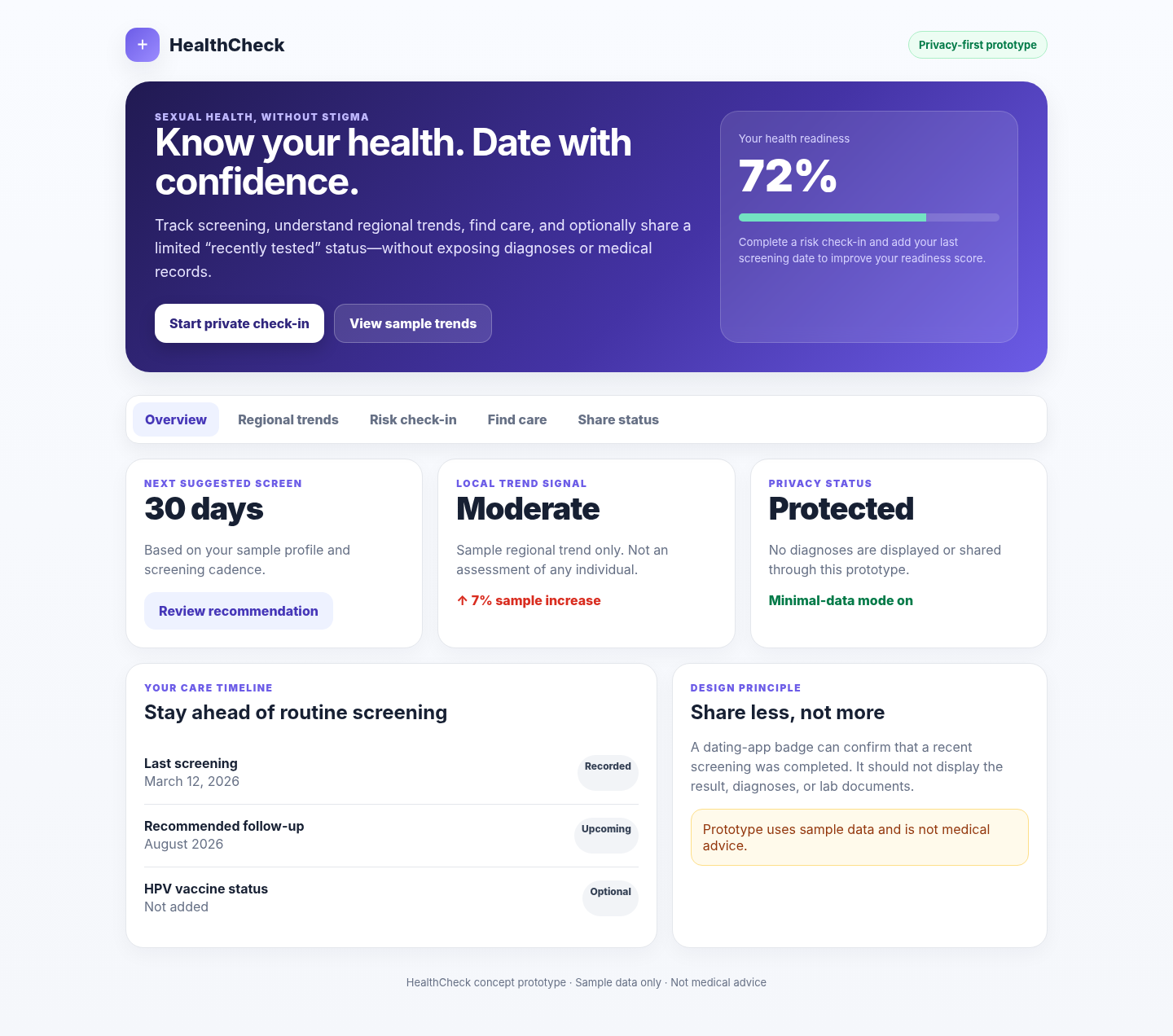
The dashboard surfaces the most important information first, including testing reminders, local trend summaries, and health readiness indicators.
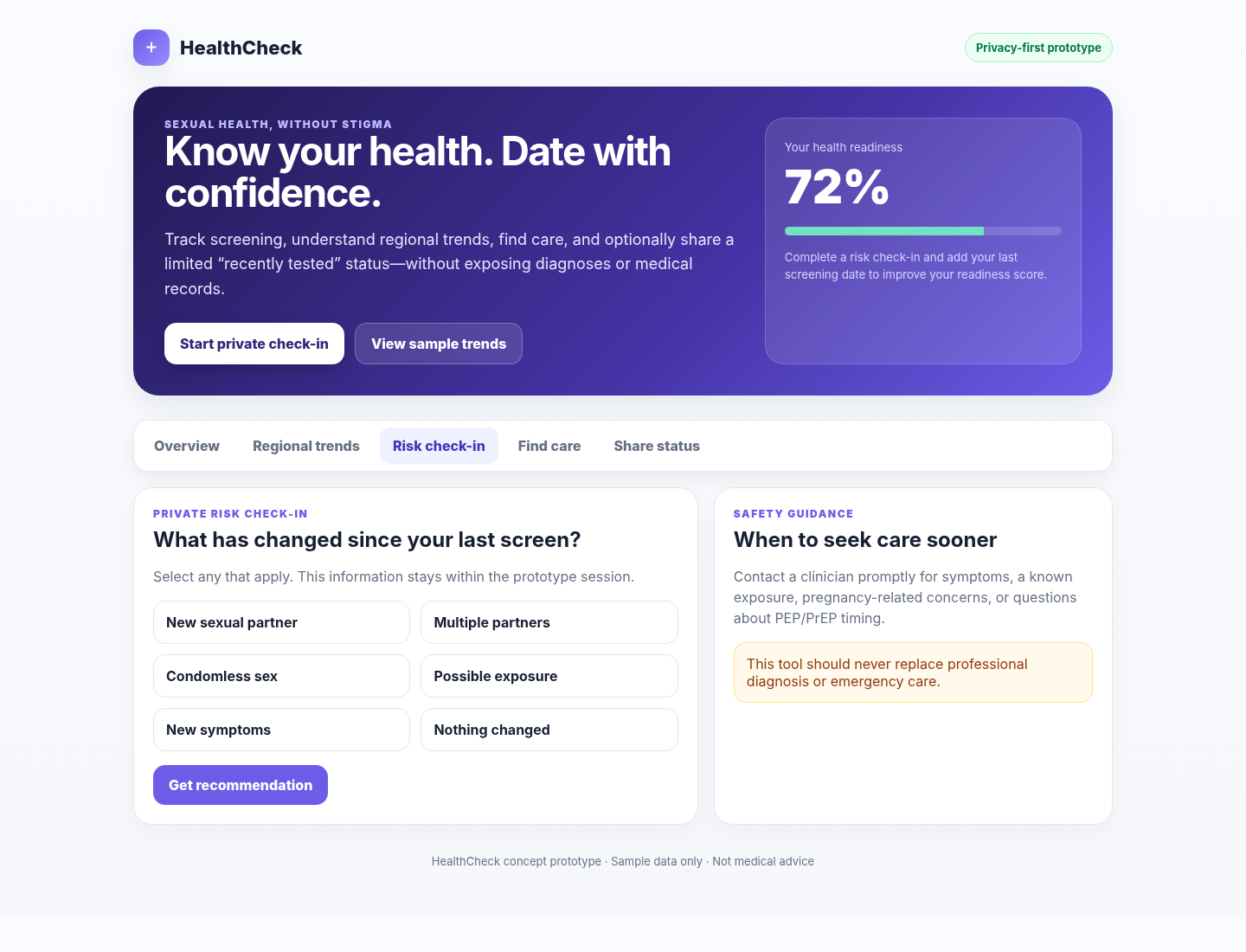
The health assessment guides users through a simple questionnaire before offering educational recommendations based on their responses.
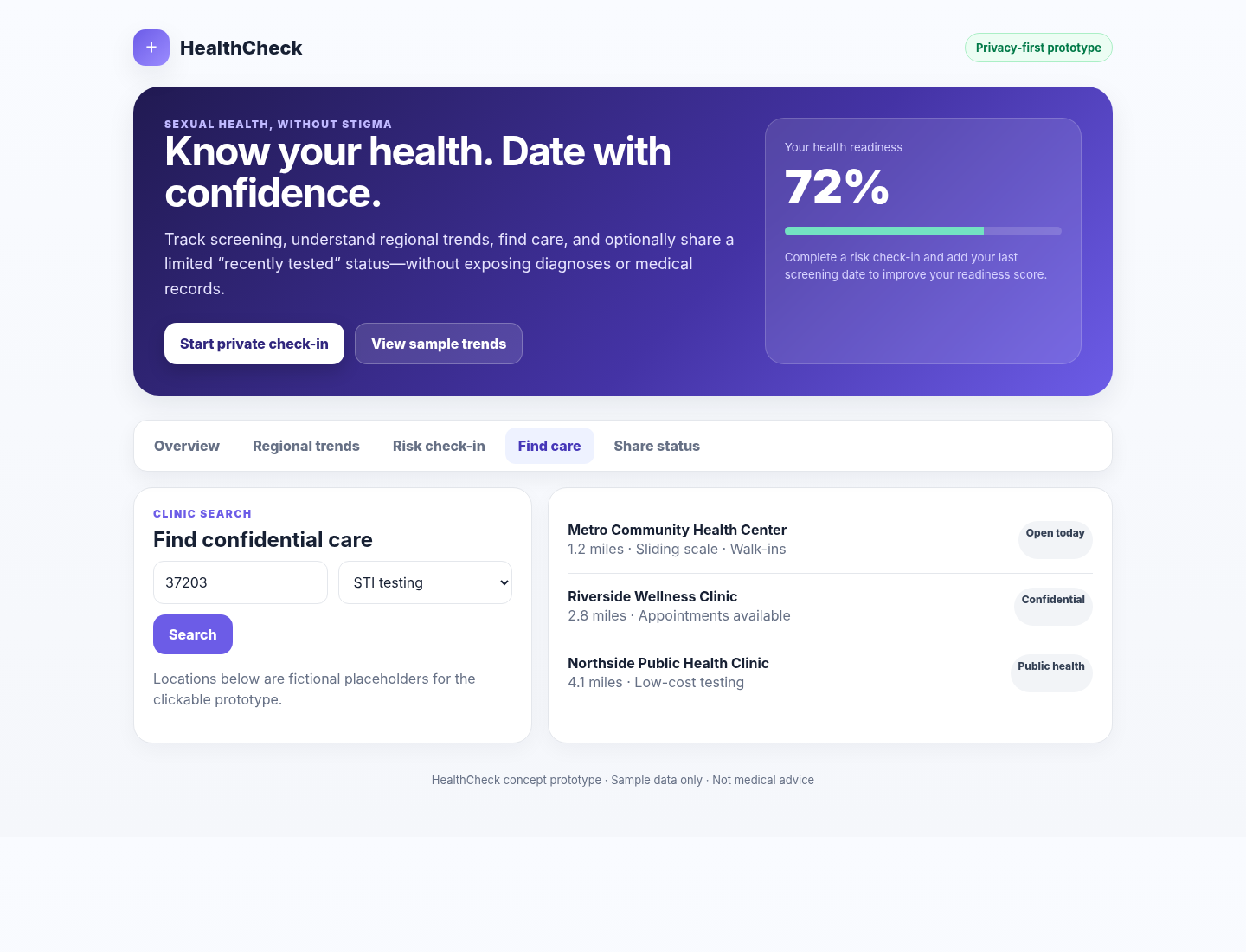
The clinic finder helps users locate nearby healthcare providers, while the privacy center gives users complete control over what information they choose to share.
Design Decisions
Privacy First
Health information is among the most sensitive data users can share.
Rather than encouraging oversharing, I designed the experience around user control. The optional verification badge confirms that someone completed recent screening without revealing diagnoses, laboratory results, or protected health information.
Simplifying Public Health Data
Government health dashboards often overwhelm users with statistics.
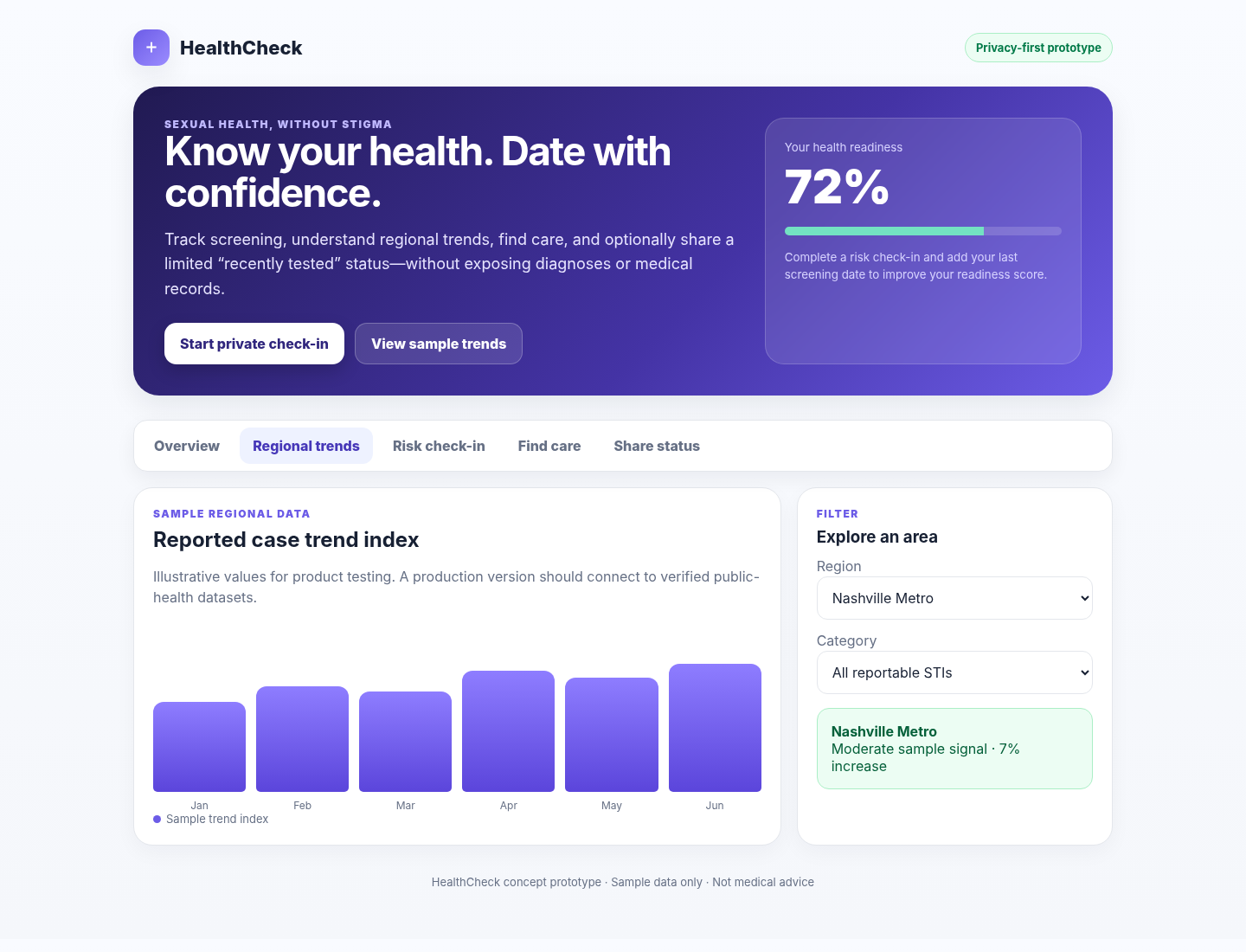
HealthCheck translates complex epidemiological information into approachable visualizations that help users understand trends without requiring medical expertise.
Reducing Stigma Through Design
Language, color, spacing, and interaction patterns were intentionally designed to feel supportive rather than clinical. The experience encourages preventative healthcare instead of creating fear or shame.
Outcomes
The prototype demonstrates how thoughtful UX can:
Encourage routine sexual health screening
Improve access to educational resources
Build trust between dating partners
Protect sensitive personal information
Make public health information easier to understand
What I Learned
This project reinforced the importance of designing for trust when working with sensitive information. Privacy should not be treated as a feature—it should be a foundation.
It also demonstrated how user experience can simplify complex healthcare topics without sacrificing clarity or accessibility. By focusing on empathy, transparency, and user control, I was able to design an experience that supports informed decision-making while respecting personal boundaries.
Next Steps
Future iterations could include:
Healthcare provider integrations
Appointment scheduling
Vaccination tracking
Anonymous partner notifications
Secure laboratory verification
Accessibility improvements
Mobile-native experiences
AI-powered educational guidance
Reflection
HealthCheck challenged me to solve a complex design problem at the intersection of healthcare, privacy, and social connection. It required balancing user trust, sensitive information, and intuitive interaction design while creating an experience that feels approachable rather than intimidating.
The result is a concept that demonstrates my approach to product thinking, UX strategy, information architecture, and designing human-centered digital experiences.